At times one finds parallels in the oddest of places. One such place was found quite by chance at the intersection of two films made by distinctly dissimilar filmmakers. One a grand master who is spoken of in hushed tones of reverence even by fellow filmmakers of note, Robert Bresson. And the other an accomplished breaker of genre convention and baroque stylist, acknowledged in some circles as a master in his own right, Sergio Leone. The point of intersection was a 13-week course I was teaching on film montage. With my syllabus all but filled I was still feeling remorse for not being able to at least schedule a few excerpts from Leone’s Spaghetti Western masterpiece, Once Upon a Time in the West (1968), which would have offered a fascinating alternative to the many other editing styles represented in the course. Since I could not fit in the entire three hour film I decided I would show the long opening scene, which begins pre-credit and then runs through the credits. I felt this would work well because the opening functions like a self-enclosed short film, with a clear beginning, middle and end. But I still had the problem of finding a film to program it with which would serve a heuristic purpose. After thinking through all the films on the syllabus my eyes settled instinctively on Bresson’s Pickpocket (1959), which was long scheduled into the course. Something about their mutual sparseness and elliptical cutting styles made them fit in my mind. I only realized just how well they fit –in both the complementary and contradictory sense– after watching them blocked together. Pickpocket, loosely based on Dostoevsky’s Crime and Punishment (1866), tells the story of a young, directionless man, Michel (Martin LaSalle), who briefly finds a sense of quite solace and accomplishment leading a life of petty crime. The decision to turn to thievery –pickpocketing– is introduced to us through a diary entry as if it were some form of a spiritual calling. In the famous opening scene at the race track –where Michel brazenly approaches a woman in a crowd from behind and tries to steal from her purse– Michel is caught by authorities, but is released after a brief interrogation for lack of evidence. From this point on Michel becomes a hunted man, continually being tracked, questioned, and challenged by the father figure/police detective in charge of his case (Jean Pélégri). To the point where Michel even leaves Paris for two years abroad (Milan, Rome, then London) in an attempt to escape the police’s trace. In one of Bresson’s most daringly provocative ellipsis’, the ‘two-year’ interlude is represented in one single, 23 second close-up shot of Michel writing in his diary, and then we see him back on the Paris train platform wearing the exact same black suit, shirt and tie that we saw him wearing when he left two years ago! (This elliptical gesture has its reverse parallel in the Once Upon a Time in the West excerpt, to be discussed later.) While hunted by the police, Michel’s sense of confinement –suggested constantly through the film’s mise en scène of Michel’s cramped, seedy apartment, the narrow corridors of his tenement, and his eventual prison cell– can also be seen as a ‘spiritual imprisonment,’ or in the least, an emotional sterility. I do not want to get into the well-traveled critical debates over Bresson’s status as a ‘Jansenist’ director, but will merely lay the platform for the comparative analysis to follow. A great body of criticism surrounding Bresson’s works position him thematically within the religion of Jansenism, a 17th century ascetic school of Catholicism which strayed from orthodox Church Catholicism in France by believing in the principles of Fate/Predestination and Grace: Jansen argued in favor of absolute Predestination, in which humans are perceived as incapable of doing good without God’s unsolicited grace and only a chosen few are believed to receive Salvation. [1]Hence in Jansenism the notion of humans having a free will to choose their destination is a sham, an illusion, for “Christ did not die for all, but only for those who are predestined to salvation.” [2] A person who feels they have done well by God or feel they have achieved salvation through their own will has in fact only ‘become’ free by picking the predetermined will of God. Although Pickpocket is by no means a case study of these Jansenist principles, there are elements in the film’s editing structure, mise en scène, and plot development which can certainly be read in light of them. For example, the film’s extensive use of pathways, portals and transitional spaces (staircases, corridors, doors, train platforms, elevators) are suggestive of the several life choices ahead for Michel, who appears indecisive in making them. Throughout the film we see Michel enter and exit numerous doors and, more tellingly, leave doors unlocked, ajar, or open. Not only do the doors and corridors symbolize Michel’s possible pathways in life, but his perplexing (and unrealistic) habit of leaving his apartment door ajar when he leaves for the day can only be made sense of in a metaphorical manner: a symbolic (or unconscious) fear of closing off possible life choices.   This latter reading is given a fair amount of credence in one striking scene. Michel leaves his apartment and, as usual, leaves his front door unlocked and ajar. He begins to walk down the stairs but is stopped by something he sees off screen. The camera frames him in a medium long shot, with his eyes gazing intently in the direction of the bottom of the stairs. Where we would expect a cut to what he sees, the camera stays on him, until he looks down (as if in shame) and then back up. We finally cut to his point of view: a young man, a stranger, dramatically framed through the open front door of the building. He leaves frame left, but returns a few seconds later to return the gaze in Michel’s direction. The camera cuts back to Michel, still looking at the stranger, who then slowly turns and walks back up to his room to sit on the side of his bed in deep thought. Why does he decide to return to his apartment? A few seconds later his friend Jacques and Jeanne arrive unannounced. He intuits the reason for their presence: they want him to go see his dying mother. He refuses, an act which should make us feel antipathy toward him, but which strangely does not. They leave, as he soon does (leaving his front door open), to meet with the strange man seen moments earlier. He approaches him on the sidewalk and asks, “What is it? Who are you?” The man does not respond, but merely motions for him to follow, which Michel does. The whole playing of this scene –the night time setting, the silent yet provocative gazes, the body language– suggests a male pickup. From this point on Michel meets the other male pickpockets and joins their collective. His ‘initiation’ includes a quick study in the skills and techniques of the trade. On the manifest level this scene can be read as Michel deliberating between a life of crime and a life of normality, and in saying no to Jeanne and Jacques, opts for the life of crime. On the psyhso-sexual or ‘latent’ level, this scene can be read as Michel deliberating between a life of homosexuality or heterosexuality, opting (at least for the time being) for homosexuality by joining the all-male pickpocket cell.    I’ll now move on to the comparative analysis part of this exercise. The comparisons I see between Pickpocket and the opening of Once Upon a Time in the West are both formal and thematic. In some cases the comparison is one of similarity, in other cases the comparison is one of parallel or contrast. In some cases the end result is the same, but the means used to achieve the effect or meaning is different. For example, in both cases the mise en scène renders the feel of containment/imprisonment, but in completely different ways. In Pickpocket Bresson frames Michel in tight, small spaces, like his tiny apartment, narrow corridors, staircases, and, ultimately, a prison cell. In the opening of Once Upon a Time in the West Leone suggests imprisonment by setting his characters against vast, open spaces, with large mountain ranges in the background of shots which shuts off the horizon. Leone also evokes imprisonment in other ways more similar to the methods used by Bresson, such as the moment where Jack Elam traps a fly in the barrel of his gun (with the sound of the buzzing fly magnified), the presence of a bird in a cage being taunted by one of the outlaws, a claustrophobic shot of the camera framed from the underside of an oncoming train, or the shot when the gunslingers are boxed in by foreground and background space when the train transporting the Harmonica Man arrives on the platform.       Parallels and affinities between these two films (Pickpocket and the opening of Once Upon a Time in the West) also exist at the level of theme, subject, or action. To begin, the Western is the popular genre par excellence when it comes to religious symbolism and imagery, beginning as early as 1916 with William S. Hart’s Hell’s Hinges. Religious and Biblical stories and imagery abound in the Western: the return of the Prodigal son, Christ figures, redemption stories, the west as a ‘garden of Eden,’ etc. (See Irini Stamatopoulos’s essay in this issue.) In Pickpocket I discussed the possibility of reading Michel’s decisions concerning his pathways in life in terms of the Jansenist belief in Predestination. In this reading (though by no means exclusive) the “strange path” that Michel claims to have taken to arrive at Jeanne’s love is in fact one already chosen for him by God. This fits in with all the images of imprisonment, the open doors, and prescribed physical spaces (corridors, staircases) which in effect ‘lead’ Michel to Jeanne. Jeanne becomes the light which leads Michel along the path to his salvation. In a wholly different, yet parallel sense, the fate of the three gunslingers are also predestined: a gunfighter must live and die by the gun. As many westerns dealing with the ‘tired’ gunslinger motif have already articulated, death becomes the only means of escape from a life of constant showdowns and challenges. (The exemplary model here being Henry King’s The Gunfighter, 1950). Death embodies freedom. In this respect the Harmonica Man becomes the equivalent of Jeanne: the figure who leads the gunslingers to their salvation. Other parallels exist on a more superficial level. For example, in both cases the films feature all-male groups in a homosocial world –pickpockets and outlaws. In what could only be a fortuitous (for this comparison) fact, the two constant icons of the western genre –the horse and the ‘iron horse,’ the train– appear in Pickpocket. In the opening racetrack scene we hear the off-screen sounds of the horses running around the track, and in the later train station scenes when Michel leaves Paris to go abroad (and then returns) we see a train. Even the less constant but common western genre site of the prison cell appears in Pickpocket. As a general statement, one can say that both Pickpocket and Once Upon a Time in the West are ‘art films’ in the disguise of a popular genre (the crime film and the western). If anything, this analysis demonstrates how affinities can exist in the most unlikely of places, or, in another sense, that if one looks long and hard enough, similarities will begin to surface. My initial intuition of pairing these two films together was borne out by my class experience, with my students also seeing parallels on many different levels between the two films (on my prompting). Writing this has been an interesting exercise in ‘creative’ interpretation, renewing old viewing habits, and in cultivating the lateral thinking process; and perhaps it will encourage other film critics and writers to begin looking at films with a renewed perception and an open mind at ‘seeing’ through surface differences at strange affinities which may lurk below the threshold of critical orthodoxy. Endnotes
1 Jansenism. Accessed 02/26/07.
2 Catholic Forum. Accessed 02/26/07
3 This observation is made by James Quandt in his commentary track on the Criterion release of Pickpocket.
4 All quotes by Robert Bresson are taken from Notes on the Cinematographer. 1975 With an Introduction by J.M.G. Le Clézio. Translated from the French by Jonathan Griffin (London: Quartet Encounters, 1986).
L'originale si trova qui: |
domenica 23 settembre 2012
Strani incontri: Sergio Leone meets Robert Bresson

mercoledì 19 settembre 2012
Un femme douce

Un monologo sul tempo, un film del dopo tutto al presente (Giorgio Tinazzi).
Un film gelido (François Truffaut).
La prima idea che mise piede nella mia mente alla visione di Così bella, così dolce è stata: “ come è possibile che un film inserito nel catalogo della San Paolo Film possa contenere delle scene di nudo e non essere sforbiciato”. La risposta era ovvia, Robert Bresson è un regista cattolico e quindi può. La perplessità nasceva perché mi ricordavo di quando in collegio, durante la proiezione di Ursus nella valle dei leoni il prete protezionista metteva il dito sulle scollature della protagonista, anch’esso della San Paolo Film.
Dire che Robert Bresson è un regista cattolico è come dire che Clint Eastwood è di destra o Johann Sebastian Bach un luterano.
Rispetto al racconto di Dostoevskij, il film mi pare che tratti più benevolmente il marito, un meschino usuraio, che ripensa il rapporto con la giovane moglie suicida e nel suo egoismo quasi spinge oltre la finestra dopo averle negato la personalità.
Solo al momento dell’uscita di casa del corpo esanime si accorge della sua estrema solitudine che cercherà di alleviare trasponendo la sua vita in un diario.
"Immaginate un uomo, accanto al quale giace, stesa su di un tavolo, la moglie suicida, che qualche ora prima si è gettata dalla finestra. L'uomo è sgomento e ancora non gli è riuscito di raccogliere i propri pensieri...Ecco, parla da solo, si racconta la vicenda, la chiarisce a se stesso..." (F.Dostoevskij) 
lunedì 17 settembre 2012
Problemi?

Non esiste un problema così grosso da cui non si possa scappare a gambe levate. Snoopy,
citato da Nick Ray
domenica 16 settembre 2012
Sono scappato da tutto
OGGI
AL CINEFORUM PEPPUCCIO TORNATORE

Sono scappato da tutto. Da mia moglie. Dalla mia casa. Da un figlio adottato. Da un lavoro di successo. Da tutto eccetto le cattive abitudini di cui non riesco a liberarmi. (David Locke)
L’avventura e Deserto (rosso) sono due titoli che ci conducono dentro questo film antonioniano del 1975, la sua opera definitiva.
L’avventura è quella del doppio David - Locke e Robertson –, il deserto è quello reale, africano, e quello metaforico che circonda la vita quotidiana del reporter e del trafficante d’armi, che diverranno un’unica identità e con questa il David sopravvissuto abbraccerà volontariamente, senza grido, la morte.
Questo ultimo titolo del regista ferrarese ci riporta al suo particolare sguardo, fotografico, - arricchito nel finale da un piano-sequenza che dura otto minuti - di riprodurre il paesaggio: l’Emilia ne Il grido, la Sicilia ne L’avventura, l’ovest americano in Zabriskie Point, l’Africa e l’Almeria in questo Professione: reporter.
Un’ultima annotazione, come un ricordo: siamo nella metà degli anni ’70 e Jack Nicolson li sta cavalcando alla grande: L’ultima corvé, Chinatown, Qualcuno volò sul nido del cuculo per citarne alcuni.
La ragazza: Tutti i giorni sparisce qualcuno.
David Locke: Ogni volta che uno esce da una stanza.
David Locke: Ogni volta che uno esce da una stanza.
Qui sotto il piano sequenza citato
venerdì 14 settembre 2012
Livio Lorenzon must die
OGGI

Dario, Sira, Rezius, Rabirius, Itus, Vibio, Semanzio, Euclante, Xena.
Livius Livio Lorenzon su tutti, e ritorno bambino.
mercoledì 12 settembre 2012
Finale senza respiro
Ci sono sequenze finali e sequenze finali, quella del primo Jean Luc non finisce dal 1960, perché è incollata senza respiro sullo schermo.
lunedì 10 settembre 2012
Film maledetto

Je t’aime, je t’aime di Alain Resnais
continuerà ad essere accompagnato da bisbigli se non dal silenzio, come si conviene al film maledetto di un autore che tutti più o meno dichiarano di ammirare.
venerdì 7 settembre 2012
Bresson, il mite


Questa nuova retrospettiva dedicata al francese Robert Bresson comprende le sue opere tratte da due racconti brevi di Dostoevskij - La Mite e Le notti bianche - uno di Tolstoi – La cedola falsa o Denaro falso - e due romanzi – Diario di un curato di campagna e Mouchette - Georges Bernanos. Tutta questa letteratura è accomunata dalla nuova scrittura che ne fece con le immagini Bresson. A vederli con un gusto particolare che non a niente a che vedere con le immagini di un qualsiasi Cameron o Moretti, si potrebbero prendere per dei film muti, la parola conta poco rispetto ai dialoghi originali degli scrittori sopra citati. E’ cinema scarno, sobrio che ha affascinato due uomini diversi ome Anderj Tarkovskij e Paul Schrader.
Forse, certo, mi ripeto, ma devo aggiungere che oggi l’unico regista da accostare a Bresson è Clint Eastwood, lui solo riesce a fare una cinematografia morale.
mercoledì 5 settembre 2012
Bresson, Dostoevskij, Tolstoi e Bernanos

Robert Bresson
25/09/1901 - 18/12/1999
il più morale dei registi morali
martedì 4 settembre 2012
La melodia e la mano sinistra

Quello che Nick sta cercando di dirti, giovanotto, è che la melodia è negli occhi, mentre le parole sono solo la mano sinistra
Nick Ray, op. cit.
lunedì 3 settembre 2012
Diabolicamente servo
OGGI
AL CINEFORUM PEPPUCCIO TORNATORE


In una invernale swinging London prima maniera, folgorata dalle luci di Douglas Slocombe e tinteggiata dalle musiche raffinatissime di John Dankworth si muovono ( mi viene da scrivere danzano) Dirk Bogarde, Jame Fox, Sarah Miles e Wendy Craig nella prima collaborazione tra Joseph Losey e Harold Pinter che è poi un adattamento di uno sconosciuto romanzo di Robin Maughan. La vicenda è a dir poco umana: la presa del potere di un servo contro il padrone. Questa esperienza servirà al grande Dirk per tratteggiare, dieci anni dopo, Il portiere di notte. In questo film si muove diabolicamente in un appartamento locato dal giovane, biondo, sessualmente ambiguo, e ricco Tony: ecco ancora una lettura diversa, il povero contro il ricco.
L’arma di cui si serve Hugo Barrett è la psicologia, con quella frantuma lo status, anche sociale, di Tony, avendone afferrata la natura debole e corrotta.
Non so con quali agganci accosto questo film a quelli successivi di Pier Paolo Pasolini, Teorema del 1968 e Ultimo tango a Parigi di Bernardo Bertolucci del 1972, non credo però di prendere abbaglio.
Un ultima annotazione: Joseph Losey, assieme ad un altro eccellente immigrato, Stanley Kubrick, portò nel Regno Unito una ventata di rinnovamento in quella cinematografia, che sboccerà con le opere dei giovani del free cinema.
domenica 2 settembre 2012

mercoledì 29 agosto 2012
Bianco e Nero


Questo filmuni di John Ford in bianco e nero era nel listino dell’Angelicus dell’avvocato Mongiardo di Messina. Forse al Cinema di Loreto di Platì - il cui vero ed unico gestore è stato il mitico Mimmo Addabbo - l’ho visto nella primissima tenera età assieme allo zio Peppino.
Le giornate di proiezioni settimanali erano tre: il martedì alle 19,30, il sabato alle 19,30 e la domenica alle 14,30 e alle 19,30. Lo spettacolo domenicale delle 14,30 era solo intasato di bambini, poche bambine, anzi non ne ricordo neanche una, comparivano solo durante le ore di catechismo, gli altri spettacoli erano frequentati dai grandi. Sabato e domenica il film era lo stesso, a colori e generalmente in cinemascope. Il martedì vi si proiettavano film per grandi e quasi sempre in bianco e nero come questo Fort Apache o Catene di Raffaello Matarazzo. I piccoli potevano immaginare quanto accadeva sullo schermo solo vedendo i manifesti e le foto che incollate su un supporto incorniciato di legno, protetti da una rete per non essere danneggiati, venivano appoggiati nella via XXIV maggio, di fronte il bar di papà, sulla parete della casa dove allora c’era l’ufficio postale, e ritirati la sera. Noi piccoli sapendo l’orario di uscita dei manifesti aspettavamo con impazienza l’arrivo dei cartelloni, portati da altri ragazzi più grandi che li sorreggevano agli angoli.
Finita questa piccola visione tutta immaginaria si tornava alla vera occupazione di quei pomeriggi:la merenda con fette di pane ed olio, correre per le strade, giocare nei casalini o nella fiumara, aspettando il cartellone del sabato per sapere a cosa si sarebbe assistito la domenica alle 14,30.

martedì 28 agosto 2012
Azione disinfestante, disinfettante

Trasferimento di modulazione Piero (Pierfrancesco) Bargellini
Film che non ammette spettatori perché non lo si guarda, ma lo si agisce, non spinge all’azione, azione disinfestante e disinfettante contro i bacilli del sentimento e della vergogna.
lunedì 27 agosto 2012
Where Do I Go from here

In questo articolo molto eloquente potete trovare quant'altro sul primo film di Michael Cimino
| Una calibro 20 per lo specialista è il titolo di un piccolo capolavoro di M. Cimino, un film forse lasciato un po' ai margini della critica internazionale, forse per via della microstoria che narra, lontana da un fulcro storico preciso, al di là di luoghi personaggi eventi importanti, vicina però come non mai ai sentimenti che ruotano attorno ai quattro punti cardinali della narrazione: Caribù (Jeff Bridges), un giovane americano scapestrato che vive cogliendo l' attimo e che pagherà la sua sete di conoscenza morendo da 'eroe' (saranno parole sue), l' Artigliere (Clint Eastwood) e Leary 'il Rosso' (George Kennedy), due facce della stessa medaglia, entrambi pluridecorati eroi di guerra, qui antieroi che campando d' espedienti minano dal basso l' idea stessa del 'self-made-man', e Goody Geoffrey Lewis), spettatore impotente e capro espiatorio delle ire sterili dell'amico Leary. Non mi voglio soffermare sulla trama del film in questione, sarebbe troppo riduttivo e semplicistico tracciarne i lineamenti fondamentali, essendo, questa, un' opera che deve rubare qualcosa all' animo dello spettatore, non deve solo essere analizzata, deve essere amata emotivamente e seguita per la sua dimensione onirica. In fin dei conti, i quattro personaggi vivono dall' inizio alla fine un solo grande sogno: trovare un nuovo Eldorado, dopo le delusioni che la Storia ha riservato all' Artigliere e al Rosso, di qui l' escogitazione di assaltare una banca e fare soldi, progetto che sfumerà prima dell' alba, in un' escalation di piccolissimi e fragili errori che risulteranno fatali all' operazione, a cui conseguirà il ferimento e l' abbandono sulla strada di Goody, la morte di Leary sbranato dai cani del grande magazzino in cui aveva lavorato per finanziarsi la rapina, la prossima morte di Caribù per un colpo alla testa infertogli dallo stesso Rosso che voleva fuggire per tenersi il malloppo tutto per sé. L' unico superstite sarà l' Artigliere che, proprio nell' ultima sequenza della pellicola, vediamo a bordo di una Cadillac tutta bianca, assieme al morente Caribù, uomo a cui l' ironia della sorte aveva tenuto in serbo di ritrovare il sito di una piccola scuola ove tanti anni prima aveva nascosto, dietro la lavagna, un bottino ingente. La finale fuga a folle velocità sull' autostrada a bordo della fuoriserie con accanto l'amico morto rappresenta l' inizio della nuova, rinnovata 'vita al massimo', questa volta, dell' Artigliere, che farà proseguire in se stesso l' ideale di libertà di Caribù. Questa frammentaria introduzione al lavoro in questione ci permette ora di trovare simmetrie asimmetriche nell' evoluzione dei rapporti affettivi fra i quattro citati protagonisti, meglio fra il 'figlio' Caribù e il 'padre' Artigliere, il 'patrigno' Leary e Goody, lo dice il nome stesso, un uomo tutto sommato corretto, buono, trasparente e prevedibile. In opposizione, si può intendere l' atteggiamento fin d'apprincipio ingordo di Leary il Rosso, rosso di capelli come di sangue caldo, personaggio che sogna appunto un Eldorado che gli sarà vano, uomo infantile nel suo rapporto con l'altro sesso, voyeur ma facile a sparare come nessuno, insomma, un tipico esempio di parodia. Quando, nella prima sequenza, Caribù ci viene presentato come sorto dal nulla, pantaloni di pelle nera, aria sbruffona e simpatica, ridanciana, capiamo che sta inscenando un handicap alla gamba destra per gabbare un venditore d' auto usate onde rubargliene una senza targa. Notare che alla fine del film Caribù morirà in seguito, come detto, ad un colpo alla testa datogli da Leary, emorragia che gli paralizzerà non a caso gamba e parte destra del corpo. L' incontro con l' Artigliere avverrà per puro caso, questi travestito da prete mentre fuggiva da un complice di Leary che lo aveva scovato nella chiesetta dove si era imboscato, ma una sbandata del giovane grazie a cui ucciderà, investendolo, Larsen, sarà il punto di non ritorno per cui le vite dei due diverranno indissolubili, da quel preciso istante. Ecco che la stessa disarticolazione della sceneggiatura non prevede la probabilità di calcolo, ma lascia all'imprevisto, totalmente all'imprevisto, ogni successiva articolazione del narrato. Tanto per citare qualche 'occasionalità', pensiamo alla bella scena dell' inseguimento delle due vetture, una quella rubata dal Artigliere, l' altra quella del Rosso, ad un certo punto il salto nel vuoto intenzionale di Caribù salva i due dagli inseguitori che, non altrettanto pronti, cadranno male e romperanno l' auto. Ancora, molto più avanti, dopo il furto alla banca, all' ingresso al Drive-In, sarà la cassiera stessa ad accorgersi del lembo della camicia di Leary penzolare al di fuori del baule della vettura di Goody, sospetto corroborato dall' accidentale starnuto del Rosso, che spingerà a chiamare la polizia, già peraltro sulle tracce dei ladri. Lo stesso colpo alla testa a Caribù avrà conseguenze disastrose, colluttazione che non avrebbe avuto luogo se Goody non fosse rimasto ferito mortalmente da una pallottola dei poliziotti, scatenando le ire di Leary. Al termine, il ritrovamento della scuoletta dismessa avverrà casualmente, l' Artigliere la riconoscerà come sbucata dal nulla, quando l' avevano cercata razionalmente in quel luogo per tempo. Insomma, Cimino pare dirci: gli eventi accadono di per se stessi e a nulla serve l' impegno degli eroi per modificare il loro corso. Ma esiste un corso, o la storia si inventa istante per istante? Caribù agonizzante, sorridendo, chiederà all' amico, sulla Cadillac decapottabile, se allora sarebbero stati in salvo, e l' altro gli risponde: "Per adesso, credo di sì". Proprio da questa semplicissima frase dubitativa si evince il succo di tutto il film. L' affetto che lega i due compagni è diverso da quello che lega gli altri due, fra Leary e Goody non c'è protezione, non c'è condiscendenza, non c'è amicizia tanto che, quando Goody diverrà un peso morto, Rosso non ci metterà due volte a scaricarlo, dandogli il colpo di grazia. Uno psicopatico che, nella sua immediatezza da bruto, giura vendetta a tutti i costi, ma mentre l' odio per l' Artigliere è odio finto, serie di scaramucce che alla fin fine celano un' amicizia complicata, contorta a tratti, l' odio per Caribù è reale, iniziato anche questo casualmente, solo perché il ragazzo si era dimostrato un po' troppo ricco di battute, e queste a Leary non piacevano, il sentirsi deriso significava per lui essere messo in discussione, non essere più temuto da qualcuno, non importa da chi, ma esser pur sempre temuto e allora rispettato. Paradossale, l' unico istante in cui Rosso e il giovane paiono in assonanza è quello in cui quest' ultimo riassume un bell' episodio capitatogli la mattina stessa al lavoro da manovale, quando una bella ragazza nuda gli si è parata innanzi, da dietro una porta a vetri, in una villetta per cui l' impresa ristrutturava. L'atteggiamento morboso del cinquantenne lo rende ancor più infantile, riassodato quando, durante la rapina, legherà in posizione da coito un uomo e una donna, dopo averne guardati ad occhi spalancati i due sessi, addirittura scoprendosi il volto rendendosi riconoscibile. Tante piccole sfaccettature di un odio per i giovani, per la sessualità, da notare soprattutto quando il colpo mortale a Caribù gli sarà inferto essendo il ragazzo travestito da donna, idea che serviva per un aspetto del piano d' assalto alla banca; tanto per citare un ultimo esempio a mo' di rafforzamento, l' urinare di Goody verrà interrotto da uno sparo di fucile di Leary, durante l' inseguimento degli altri due. Diciamo che tutti questi episodi, in cui viene ad articolarsi Una calibro 20 per lo specialista, sanno di improvvisazione, da un alto, ma anche di estrema fissazione per quel che concerne i rapporti interpersonali: non esiste la benché minima trasformazione degli affetti fra i quattro, se non un certo amore paternalistico dell' Artigliere per Caribù, ma anche questo sa di predica, è tutto sommato falsamente esternato, se il giovane morrà, allora 'pace all' anima sua' sembra dire l' Artigliere quando spezza il sigaro nel portacenere e fugge in macchina, sull' auto che Caribù aveva sognato, una Cadillac tutta bianca. Solo quest' ultimo era sincero ed immediato, e avrebbe pagata la sua voglia di conoscenza con la morte, una conoscenza che non si addiceva all' eroe americano finito che voleva far ruotare il mondo attorno a sé. Vivrà solo l' Artigliere, ma il sogno dell' auto bianca non era più tale, la stava già guidando quando l' amico se ne era andato per sempre... | ||||||
| Autore | critica: M.Crovella (da IAC) | |||||
| Fonte: | centraldocinema.it L'originale invece si trova qui: http://www.comune.re.it/cinema/catfilm.nsf/PES_PerTitolo/36F501EFEE00ABEEC1256EFD0032F6F5?opendocument | |||||
questa è la canzone per il film di PaulWilliams
domenica 26 agosto 2012
Michael Cimino & Clint Eastwood

Numerosi sono stati i soggettisti e sceneggiatori che hanno scritto esclusivamente per Clint Eastwood. Il primo, Jo Heims – Brivido nella notte -, l’ultimo, Randy Brown – l’ancora inedito Trouble with curve.
Michael Cimino è stato il secondo, con John Milius scrisse Una 44 Magnum per l’ispettore Callaghan del 1973. L’anno dopo Cimino fece il suo felice debutto con il film che tutt’ora per me rimane il suo capolavoro ed uno dei migliori film dell’uomo senza nome Leoniano e dei Hogan, Callaghan, Frank Morris ed altri Siegeliani.
Eastwood regista ed Eastwood attore nella sua lunga carriera si è mantenuto identico dal primo all’ultimo istante, questa e la sua vera forza. Nelle mani e nella mente di Cimino non si è spostato più di tanto.
Thunderbolt, l’Artigliere, è un eroe disilluso che con sguardo distaccato guarda la scaltrezza e bontà di Lightfoot, così come è disilluso e distaccato davanti alla morte di quest’ultimo che aveva trovato in lui l’unico suo vero amico. Questo discorso vale anche di fronte ai suoi ex amici e compari - Gary Busey, Geoffrey Lewis, Gerorge Kennedy -, che lo cercano per fargli la pelle. L’amicizia virile, l’aveva capito bene Cimino è uno dei fulcri su cui si basa il cinema dell’attore come del regista Eastwood.
Tutto questo discorso lo applico alla regia di Cimino che costruisce immagini dense di pathos quando ci conduce nello svolgersi della sua prima opera.
Infine voglio fare notare una costante del cinema di Cimino: il landscape. Il suo e un modo di riprodurre l’ambiente che mi riporta alle trasposizioni su tela fatte da Edward Hopper con l’aggiunta di carrelli e gru su cui è montata la Panavision dotata di lente anamorfica.
Dal Cacciatore in poi sarà tutto questo ed ancora un altro Cimino, e altro sarà il suo cinema!
giovedì 23 agosto 2012
Il cielo sopra Edmund
Roberto Rossellini usava cinepresa e schermo come Giovanni Verga usava penna e pagina
mercoledì 22 agosto 2012
Aiutami!
OGGI
AL CINEFORUM PEPPUCCIO TORNATORE

Fuori competizione a Cannes nel 1970 insieme a Tristana di Luis Bunuel è il quinto film di Sidney Pollack ed è un’opera che arriva come un pugno nelle parti basse del corpo. In quei primi anni 70 fece abbastanza chiasso, facendo alzare le quotazioni del regista, il ballo da azione rigeneratrice diventa una manifestazione degradante, per la sua presa di posizione contro il potere rappresentato duramente da Gig Young. Con l’estrema richiesta di Gloria ( Jane Fonda) risulta anche essere una liberazione da quel potere e da una vita disumana.

lunedì 20 agosto 2012
Grandi e piccoli
OGGI

La storia è la storia si sa, il cinema è il cinema, pure questo si sa.
Costantino, non Nino Costantino - il primo regista messinese di videoclip musicali – figlio di Costanzo Chlorus "pallido" ed Elena, bona stabularia, “buona locandiera”, risulta essere stato un uomo ambiguo e violento, fece uccidere la moglie Fausta ed il figlio Crispo per una presunta relazione.
La sola grandezza del film di Lionello De Felice è nei titoli di testa, con il catalogo di alcuni grandi del cinema italiano, da Massimo Serato ad Elisa Cegani, da Ennio DeConcini a Mario Nascimbene, elencati con sullo sfondo Piero Della Francesca che di cinema, anzitempo, se ne intendeva.
Dentro il cinema Loreto di Platì i bambini freschi di catechismo sognavano imprese grandi come quelle affrescate da un altro grande, Massimo Dallamano, per presentarsi candidi alla prima comunione.
domenica 19 agosto 2012
Le armi del cinema

Fraulein Doktor Alberto Lattuada
Ci troviamo di fronte ad un labirinto senza via d’uscita, ad un gioco di specchi che trova la ragione di essere nel suo infinito potere di rinnovazione. Le armi di cui tutti si servono sono la messa in scena e l’illusione che sono poi le armi del cinema, e questo spiega perché Fraulein Doktor può essere un film sul conflitto tra realtà e finzione è anche un film sul cinema, tanto più anzi.
giovedì 16 agosto 2012
New York - Rouen

Robert Kramer a Taomina ( polaroid Mittiga)
22 giugno 1939, New York City, New York, USA
10 novembre 1999, Rouen, Seine-Maritime, Haute-Normandie, Francia
C'era una volta il Vietnam, parte seconda
+%5B1965%5D+red+theatre.png)

Se per un verso Apocalypse Now ha a che fare con la psichedelica degli anni ‘60/’70, ormai al tramonto, non per niente a me il volto di Francis Ford Coppola richiama quello del defunto Jerry Garcia, Il Cacciatore – The Deer Hunter ha che fare con certa letteratura europea che parte da Guerra e Pace ed arriva a Cuore di tenebra continuando a camminare verso certi stati d’animo descritti da autori a noi contemporanei quali Camus o Malcom Lowry: parafrasando il testo di quest’ultimo viene sa scrivere Sotto le risaie.
Stranamente i migliori film post vietnam sono stai confezionati da autori italo-americani: a Coppola e Cimino va aggiunto Brian De Palma con Vittime di guerra, mentre Robert De Niro andava a spasso dentro il tema facendo ora il soldato ora il reduce. Nel film di Cimino ha però la possibilità di fermarsi e riflettere guardandosi negli occhi del cervo, prima di decidere se premere o no il grilletto.
Anteriormente ai film americani sul Vietnam, i soli ad occuparsi di quella guerra, inutile e capricciosa come i guerrafondai, furono gli autori francesi ed italiani a richiamare le platee su quanto accadeva in Indocina e su tutti Jean-Luc Godard e Bernardo Bertolucci che con spirito sessantottesco inscenavano l’impatto mentale che aveva sulle candide menti intellettuali dell’epoca. E se a Godard bastavano i suoni di mitraglia o mostrare Belmondo davanti allo schermo che proiettava incendi e devastazioni, a Bertolucci bastava mostrare la bandiera vietnamita per additare ai giovani l’ora della rivoluzione.
martedì 14 agosto 2012
C'era una volta il Vietnam


Questo è il vero Conradiano Cuore di tenebra. Quanto detto, in un flashback in avanti, sul cinema di Cimino, qui trova la sua summa: etnie, natura, scontri razziali, conservatorismo e... De Niro con una fascia attorno alla nuca come un vero Navajo. La schiera di grandi attori, tra cui il grandissimo,prematuramente scomparso, all'epoca uomo della Streep, John Cazale, fa il resto, in una gara di bravura, che non si sa a chi dare la palma della vittoria.
mercoledì 23 maggio 2012


martedì 22 maggio 2012
Uomo natura - Natura/uomo
oggi al cineforum Peppuccio Tornatore

Storia di un’iniziazione, canto d’amore pieno di speranza e disperato. Dersu Uzala è l’opera di un emigrante, di un esiliato e di un clandestino: il suo procedere lento e solenne è lo stesso della memoria quando si concentra sul passato, e pensiamo vedendolo ai film memorabili di altri sognanti viaggiatori, India di Rossellini, Il fiume di Renoir, Zabriskie Point di Antonioni. Enzo Ungari
lunedì 21 maggio 2012
domenica 20 maggio 2012

giovedì 17 maggio 2012
Vecchiaia bruciata

Epitaffio di Nick Ray
Nato
Vissuto
Interrotto
Nicholas Ray, Sono stato interrotto
Il leone di San Marco
OGGI

Cappa e spada a volontà, un cast di indimenticabili con il totalscope in eastmancolor, è una sfida alla nostalgia.
mercoledì 16 maggio 2012

martedì 15 maggio 2012
A waltz for Michael Cimino

Quanto scriverei su questo capolavoro sarebbe una ripetizione di quello che altri hanno scritto meglio, io vi propongo di vederlo come un film d'amore: quello di Michael Cimino verso David Mansfield, il giovane a cui di deve la partitura musicale, furono marito e moglie per molto tempo e si lasciarono batostandosi l'un l'altro/a. In fine divenne uno spartiacque nella filmografia di Cimino, prima e dopo I cancelli del cielo si suddivide l'opera di un visionario architetto di emozioni.
David Mansfield ben prima fece parte della storica e più capace band, dopo La Band, di cui si servì Bob Dylan ai tempi di Desire: The Rolling Thunder Revue. Si servirono di lui, tra gli altri, anche Johnny Cash, Nanci Griffith, Roger McGuinn, Edie Brickell, Lucinda Williams, Dwight Yoakam, Victoria Williams.
domenica 13 maggio 2012
Una sera ... un treno

È la pacata tabella dei logaritmi della morte. In esso il mistero riposa sulla chiarezza e l’indeterminazione su un modo pacato di guardare le cose
martedì 8 maggio 2012

lunedì 7 maggio 2012
La guerra non è finita
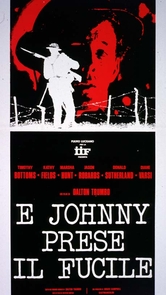
Su questo film sarebbero tante le cose da dire, unico in tutti i sensi: il debutto come regista di Dalton Trumbo a 66 anni suonati, che rimarrà il suo unico film. Il soggetto, la guerra come neanche Kubrick, che si avvalse in altre occasioni delle sceneggiature di Trumbo, la affronterà e descriverà. L’antimilitarismo,il libro del 1939 aspetterà anni per essere pubblicato definitivamente e mal digerito dai militari di carriera.
Infine la religione, attraverso i sogni di Joe, Gesù sembra avere bisogno del lettino di uno psicanalista.
La sua visione al Don Orione fu un trauma che mi accompagnò nei primi giorni in cui misi piede, da recluta,nella caserma di Sulmona e all’arrivo alla caserma Pasquali di L’Aquila, in una serata d’inverno, con tanta neve mai vista in vita mia, col pensiero andavo sempre a quelle immagini.
Qualche volta, anche desso, continuo a sognare che qualcuno mi voglia uccidere. Sento il rumore dei soldati che mi rincorrono, le loro urla, anch’io urlo, e le mie urla mi svegliano. Gesù
Non voglio più sentir dire che dio è amore, perché se no finirò per odiarlo. Joe
domenica 6 maggio 2012
Di tutto di più

Gabriele Lavia a Taormina ( polaroid Mittiga)
prestò pure, gentilmente, la voce per una mia segreteria telefonica
Iscriviti a:
Post (Atom)